Container shipping control
Container Condensation Control Starts Before the Doors Close
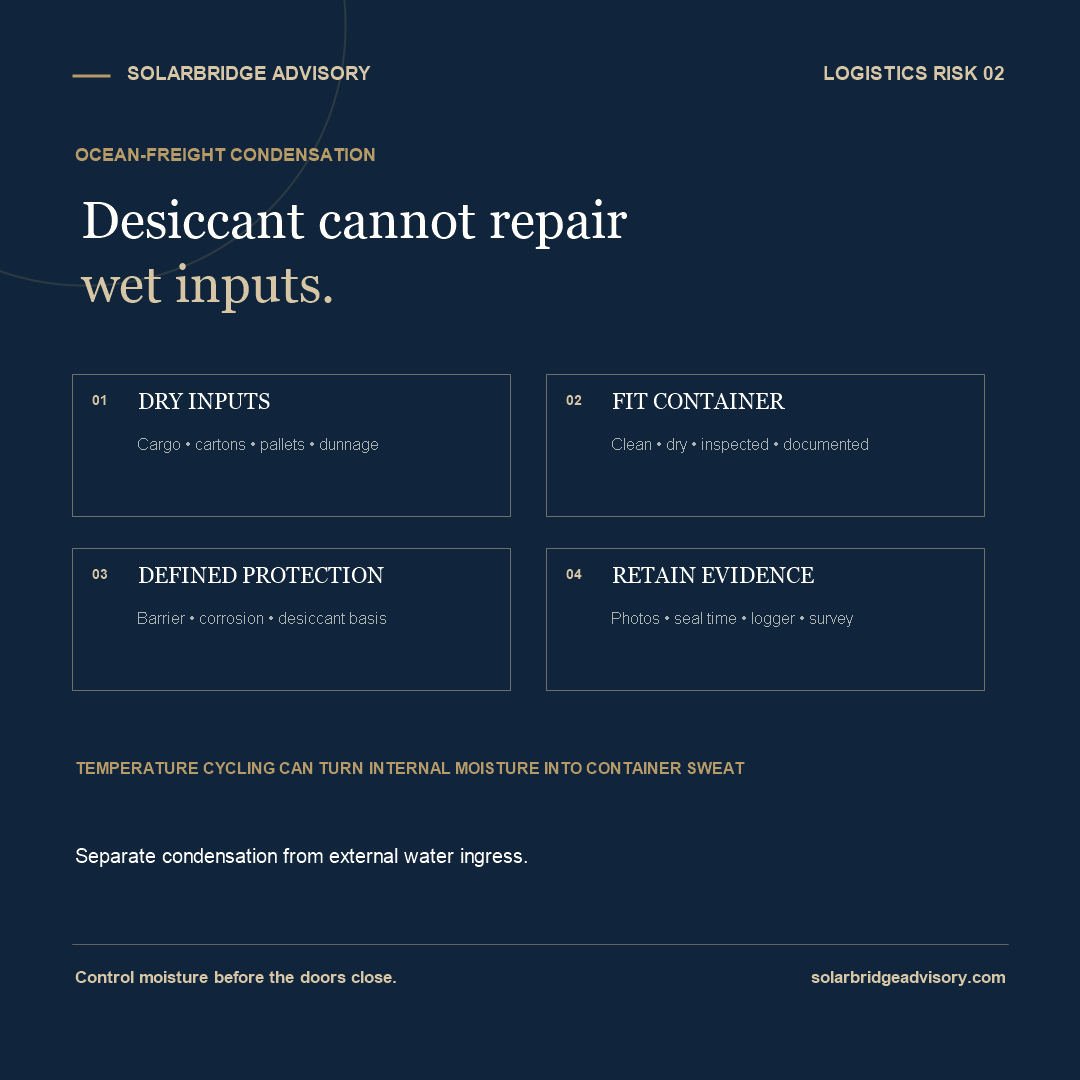
Desiccant is not a repair for wet cargo, damp pallets or cartons packed in high humidity. Condensation control starts by reducing moisture entering the container, confirming the container is fit for the cargo and documenting the protective system before sealing.
Identify the moisture sources
Moisture may come from the product, timber bracing, pallets, porous packaging or the air present during packing. Temperature changes during transport can move that moisture and create container sweat or local wetting. The relevant question is therefore not simply how many desiccant bags to add, but what moisture load is entering and how the cargo reacts to it.
Set packing-condition gates
Define measurable or observable acceptance points appropriate to the product: cargo condition, pallet and dunnage condition, carton storage, packing-area exposure and container inspection. The threshold and measurement method must be chosen for the cargo, route and season by competent packaging or shipping specialists; there is no universal quantity that fits every shipment.
Inspect the container
Before loading, check for holes, damaged seals, contamination, standing water and other defects that could undermine the packing plan. Record the container number and inspection result. A container that is not fit for the intended cargo should not be treated as acceptable merely because additional absorbent material is available.
Define the protection system
Match liners, barriers, absorbents, ventilation strategy and cargo spacing to the actual sensitivity and route. Avoid mixing controls without understanding how they interact. For example, ventilation, vapor barriers and desiccants solve different problems and can conflict when used without a coherent design.
Retain claim-ready evidence
Keep dated photos, container and seal numbers, packing records, material specifications and any moisture readings required by the agreed plan. If damage occurs, these records help distinguish a packing-condition failure, container defect, water ingress, handling event or protection-design gap.
Primary sources
- IMO — CTU Code overview
- UNECE — official CTU Code language files
- CTU Code Annex 3 — Condensation damage: introduction
- CTU Code Annex 3 — Mechanisms of condensation
- CTU Code Annex 3 — Loss prevention measures
The CTU Code is a non-mandatory global code of practice. It does not replace cargo-specific engineering, carrier requirements, insurance conditions or local law. Obtain competent advice for the actual product, packaging, route and season.
Continue with SolarBridge
Website: solarbridgeadvisory.com
Fiverr: 1-to-1 China sourcing support
WhatsApp: +86 158 5038 3561
Digital products: View the Guide and Complete Toolkit