Factory audit evidence
Factory Audits Need Triangulated Evidence
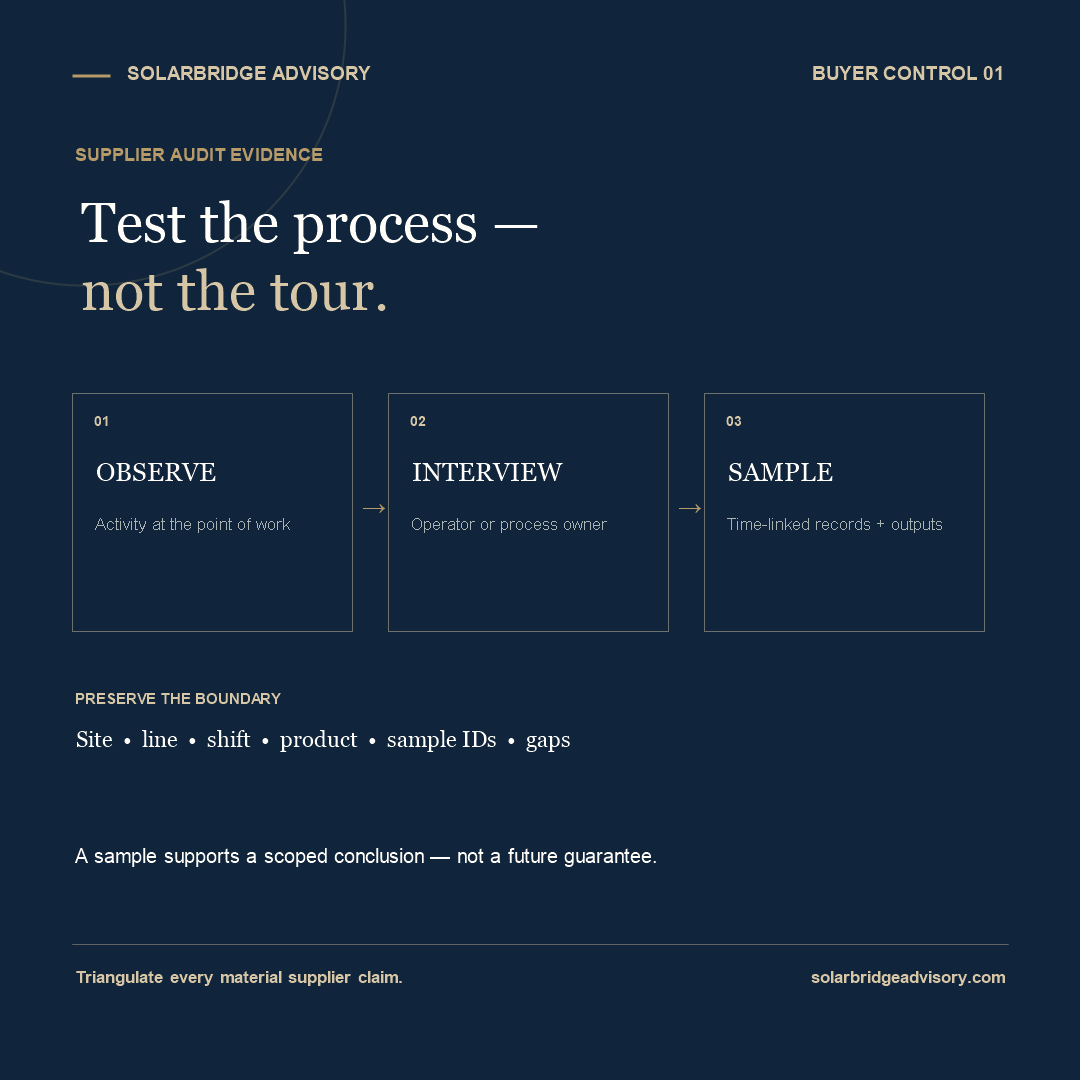
A polished factory tour can show what a supplier wants a buyer to see. A useful audit tests whether the process operates as described by combining three evidence routes: observe the work, interview the people doing it and sample records linked to the same time, shift, product or order.
Define the audit boundary before the visit
Write down the legal entity, site, product family, process, shift and decision the audit must support. A visit to the right company at the wrong site—or to the right site when the relevant line is idle—creates an evidence gap. Sampling also has limits: an audit can increase confidence within its defined scope, but it cannot guarantee future performance.
Observe the work where it happens
Follow a real unit or batch through the process when possible. Compare the actual work sequence, equipment, inspection points, material identification and handling controls with the supplier's written method. Record where and when the observation occurred so the evidence cannot be detached from its operating context.
Interview the operator, not only the host
Ask the person performing the task to explain what they do when a check fails, how they identify the current instruction and who can release or stop work. The purpose is not to test memory. It is to see whether responsibility, escalation and acceptance criteria are understood at the point of execution.
Sample time-linked records
Select records that should exist for the same product, line, shift or order you observed. Examples include incoming checks, process measurements, equipment status, non-conformance records and final inspection results. Look for traceability and internal consistency rather than collecting a large stack of unrelated forms.
Reconcile contradictions
If observation, interview and records agree, confidence increases. If they conflict, document the exact gap and request follow-up evidence or corrective action. A missing record does not automatically prove a process failed; it does mean the claimed control has not yet been demonstrated for the sampled context.
Primary sources
- ISO — ISO 19011:2026, guidelines for auditing management systems
- ISO 9001 Auditing Practices Group — Guidance on Evidence Collection
- ISO/CASCO — Building trust: the conformity assessment toolbox
The Auditing Practices Group document is educational guidance and states that it was not formally endorsed by ISO or IAF. Use this framework to plan buyer-side evidence collection, not as a guarantee of supplier capability, product conformity or future shipment performance.
Continue with SolarBridge
Website: solarbridgeadvisory.com
Fiverr: 1-to-1 China sourcing support
WhatsApp: +86 158 5038 3561
Digital products: View the Guide and Complete Toolkit